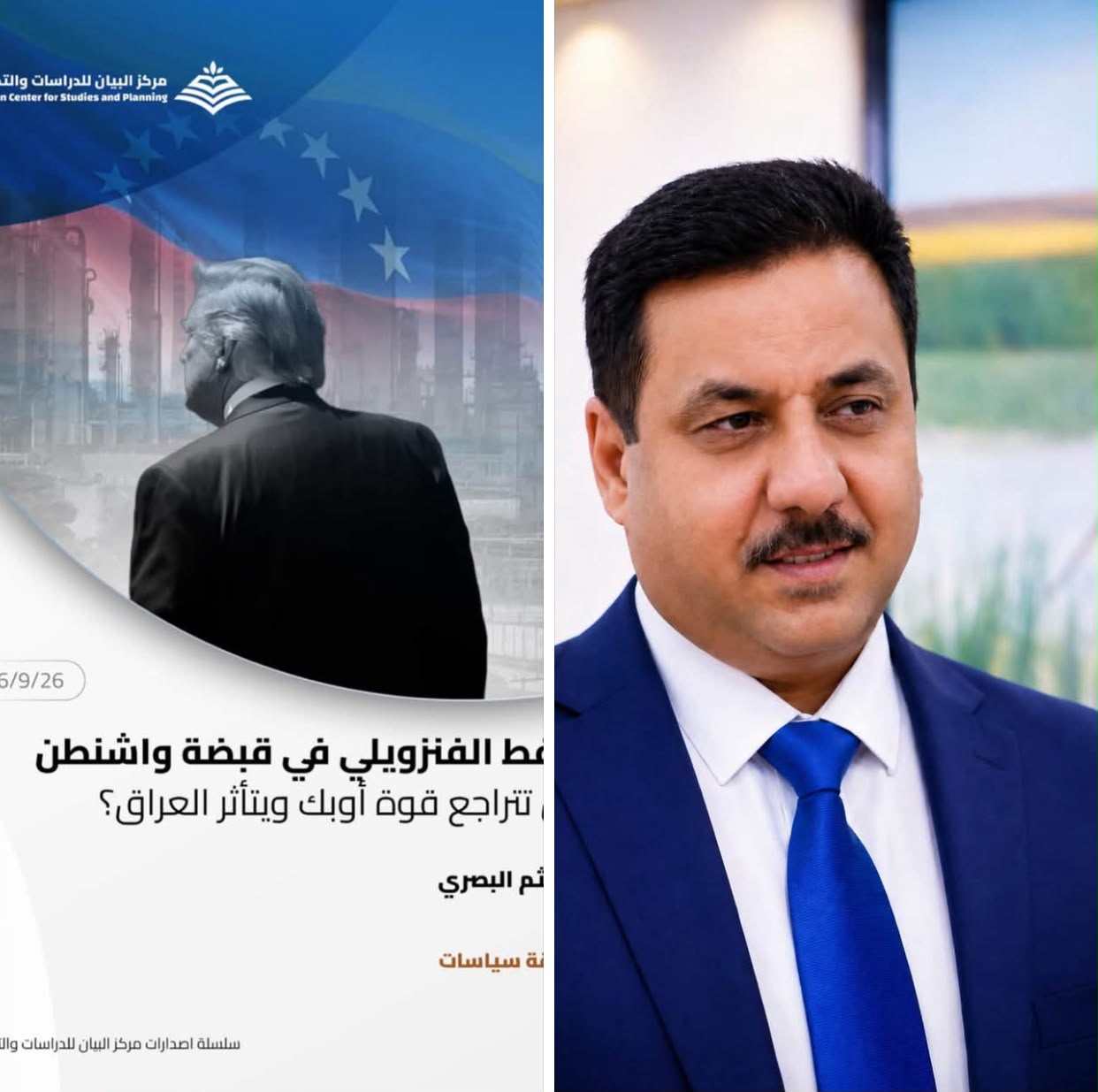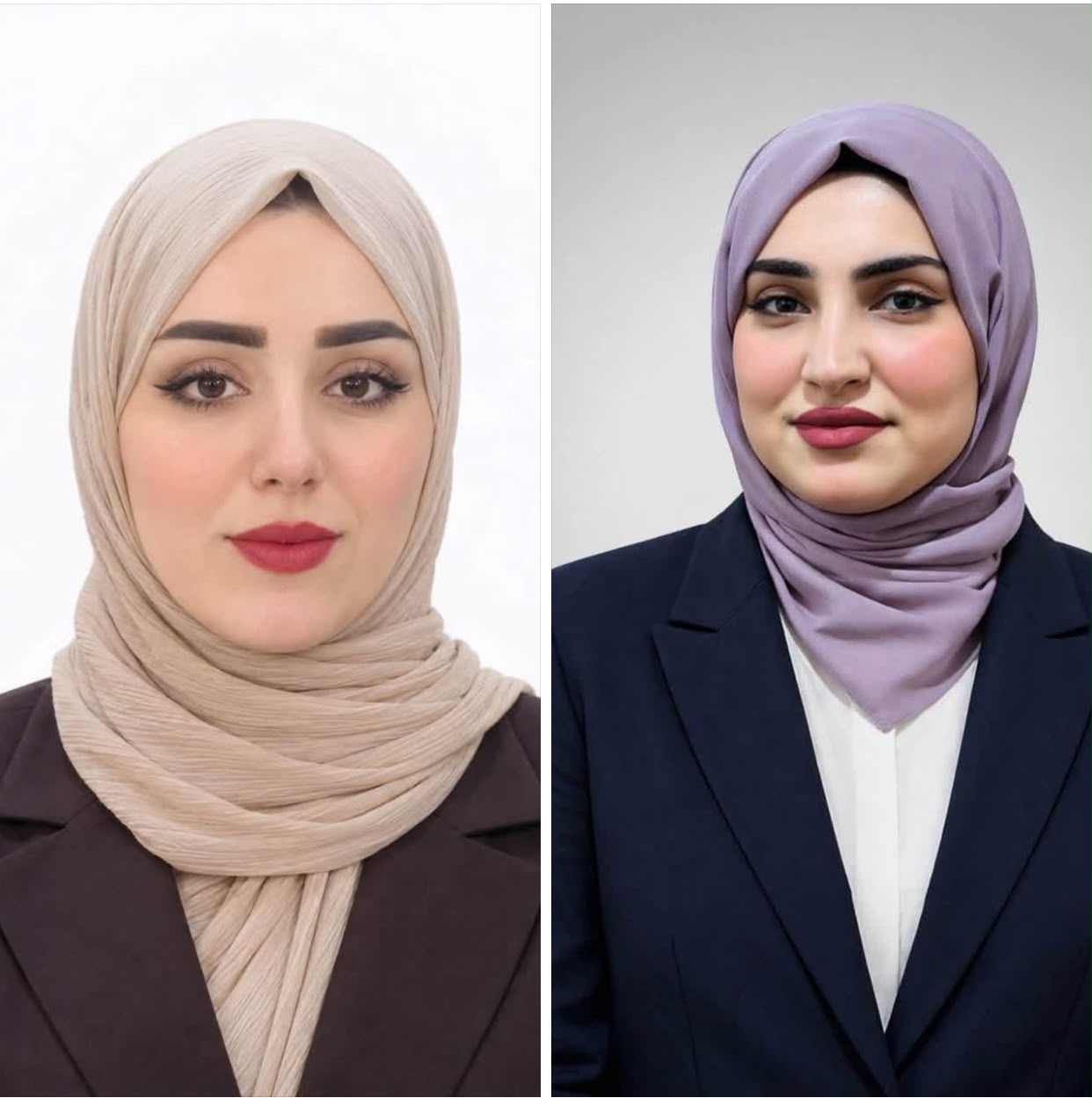
Dr. Ali Abdul Hassan Jassim, a lecturer in the Department of Petroleum Accounting, and Assistant Lecturer Nael Ghaleb Qadouri, a lecturer in the Department of Oil and Gas Management and Marketing, co-authored a book indexed in Scopus, titled "Ethical Consumption and Responsible Innovation in the Fashion World Through Artificial Intelligence." The 448-page book was published by the international scientific publishing house 1G1. The joint chapter is titled "Accounting and Auditing Sustainablely Supported by Artificial Intelligence to Enhance Ethical Practices in Fashion Manufacturing Companies." This scholarly achievement underscores the distinguished academic and research role of the faculty members at the College of Industrial Management for Oil and Gas and their contribution to publishing scientific research in reputable international journals.
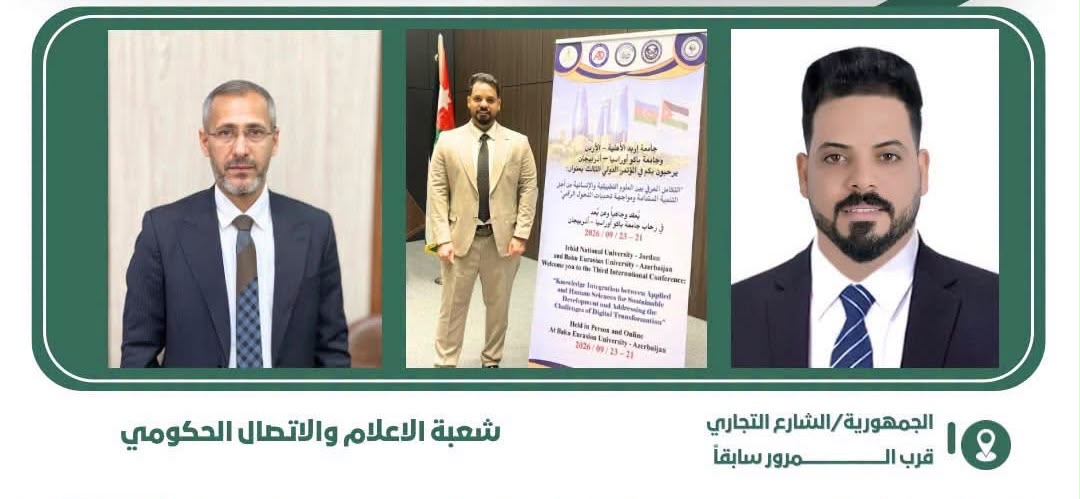
Lecturer Dr. Ali Abdul Hassan from the Department of Oil and Gas Economics, College of Industrial Management for Oil and Gas, participated in the Thirteenth International Conference in Muscat, the capital of the State of Oman, entitled: (The Role of Artificial Intelligence in Enhancing Interdisciplinary Cooperation between Humanities and Applied Sciences), during the two days of July 6-7, 2026. The lecturer's participation was represented by his research entitled: (The Role of Artificial Intelligence in Raising the Efficiency of Auditing and its Impact on the Preparation of Financial Reports), in which he addressed big data analysis, detecting sophisticated fraud, and ultimately enhancing reliability and transparency.
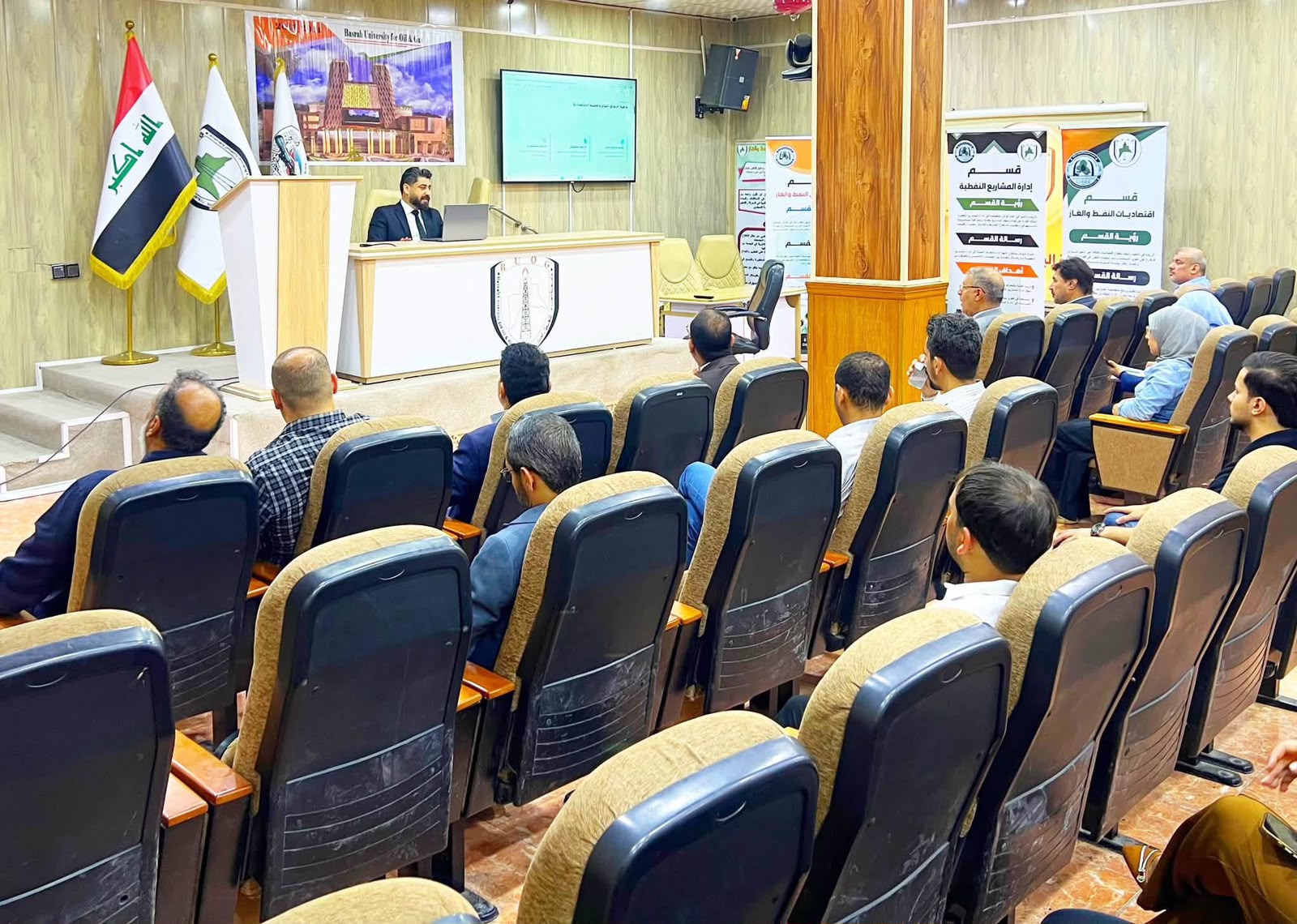
The College of Industrial Management for Oil and Gas held its second annual conference for the academic year 2025-2026 on Tuesday morning, June 30, 2026, in the main conference hall at the University of Basra for Oil and Gas. The conference was attended by the Dean of the College, Professor Dr. Sami Obaid Mohammed Al-Tamimi; the Vice President of the University for Scientific Affairs, Professor Dr. Ammar Al-Baaj; the Vice President of the University for Administrative Affairs and Assistant Dean of the College for Scientific Affairs, Assistant Professor Dr. Naseef Jassim Al-Abadi; the Assistant Dean of the College for Administrative Affairs, Assistant Professor Dr. Haider Ali Al-Asadi; the heads of the academic departments; faculty members; and college staff.The conference aimed to review the most significant successes, developments, and challenges faced by the college and its academic departments, and to present a future strategic vision to assess progress between previous years and the current year at all academic and administrative levels.The conference commenced with a recitation of verses from the Holy Quran by employee Sajjad Maitham, followed by the recitation of Surah Al-Fatihah for the souls of the martyrs, and the playing of the national anthem. The opening address was then delivered by the Dean of the College of Industrial Management for Oil and Gas, Professor Dr. Sami Obaid Mohammed Al-Tamimi, who reviewed the college's achievements and future vision, highlighting the developments of the past two years. Next, the Assistant Dean for Scientific Affairs, Assistant Professor Dr. Nassif Jassim Ali Al-Abadi, presented the first presentation, addressing scientific achievements, the increase in faculty members, and the growth in the publication of scientific research, as well as the organization of seminars and scientific activities. The Assistant Dean for Administrative Affairs, Assistant Professor Dr. Haider Ali Karim Al-Asadi, then presented the college's comprehensive vision, encompassing financial, service, legal, administrative, and infrastructural aspects. He highlighted key statistics related to the increase in staff and faculty, the improvement of financial policies in evening studies, and a comparison of revenues and expenditures for evening studies. Following this, all the distinguished professors who had served as external lecturers were honored. Since the college's establishment, this has been a gesture of recognition and gratitude for the scientific efforts made by the teaching staff who worked as external lecturers, whether they were from the oil sector or from other institutions. Then, those who obtained scientific promotion during the current year were honored, as well as those who obtained higher degrees (Master's and PhD), in addition to honoring the distinguished (ideal) teaching staff in each scientific department, the distinguished employee in the divisions and units of the Dean, the distinguished employee in the divisions and units of the Administrative Assistant, and the distinguished employee in the divisions and units of the Scientific Assistant. The Dean and the Assistants took turns honoring them, amidst a positive atmosphere that prevailed at the end of the conference, and everyone expressed their happiness at the end of the current academic year, wishing everyone success and good fortune.
A delegation from the College of Industrial Management for Oil and Gas, headed by the Dean, Professor Dr. Sami Obaid Mohammed Al-Tamimi, participated this morning, Tuesday, June 9, 2026, in a dialogue seminar held by the Finance and Administration Committee of the Basra Provincial Council. The seminar addressed the issue of outstanding payments owed to companies contracted with the oil sector and the impact of delayed payments on these companies and their employees.The seminar was attended by academics, members of the Provincial Council, members of Parliament, officials and representatives from both the legislative and executive branches of government, as well as specialists from banks and oil companies.The Dean of the College and the Head of the Department of Oil and Gas Economics, Dr. Adnan Hadi Jaaz, presented proposals and key recommendations from the Basra Provincial Council's dialogue session aimed at supporting the private sector in the province:First:To approach the federal government and the Central Bank to reinstate approvals, particularly those related to the Prime Minister's directive granting companies the right to operate according to their contracts, which stipulate that companies receive their due payments in US dollars.Second:To also implement the facilitations approved by the government to enable these companies to operate under their existing contracts.Third:To provide these companies with their daily operational fuel needs. These companies should receive the necessary fuel for their operations and the operation of their equipment, thus serving the oil and gas sector in Basra.Fourth:To support these local companies to ensure the continued employment of their staff and the creation of new jobs in the sector, which benefits Basra.Fifth:This support will also benefit the province. The continued employment of workers in these companies, whose number increases from 50,000 to 60,000 employees. As a result, the support provided to these companies means employing this large workforce, and thus they join the ranks of the unemployed in Basra Governorate.
The Assistant Administrative Assistant at the College of Industrial Management for Oil and Gas at the University of Basra for Oil and Gas, Assistant Professor Dr. Haider Ali Karim Al-Asadi, participated as a member of the committee discussing the master’s thesis of the researcher (Nagham Abdul-Hussein Attia Dawood) at the University of Babylon, on Wednesday morning, May 13, 2026. After the student defended the content of her thesis and what was contained therein, the committee decided to grant her a master’s degree with a grade of (very good) amidst the joy of her family and colleagues.
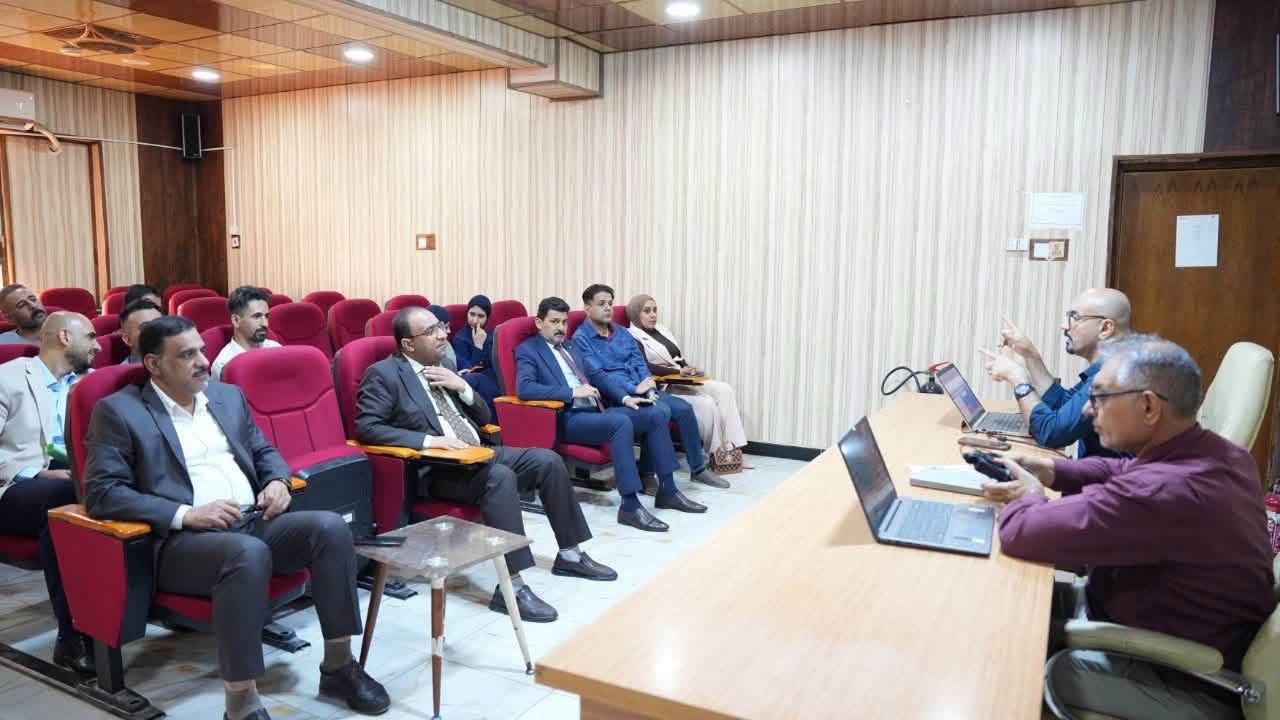
The College of Industrial Management for Oil and Gas, through its Continuing Education Unit, organized a workshop titled "The Concept of Citizenship" this morning, Tuesday, May 12, 2026, in the main conference hall. The workshop was presented by Dr. Kadhim Rasen Abdul Sahib, Dr. Ahmed Ghali Shallal, and Dr. Imad Fawzi Yousef, and was attended by faculty members.The workshop included a historical overview of the term "citizenship," presenting its definition alongside the concept of "citizen," as well as its representation in the Constitution of the Republic of Iraq, from its inclusion in the constitutional articles to the rights and duties of citizens.This workshop is part of the first pillar of the National Strategic Plan for Strengthening the Rule of Law in the Republic of Iraq (2025-2029), which focuses on promoting citizenship through its concept and origins. It defined citizenship as a legal and social bond connecting an individual to a specific state, granting them rights and imposing duties. The workshop then outlined its components, characteristics, and the conditions of citizenship under modern laws. Is citizenship a fundamental pillar of a democratic system? And how is citizenship defined in non-democratic systems? Citizenship means rights; it is an integrated system—political, economic, social, civil, and cultural—based on equality with others without discrimination, regardless of status, gender, race, color, sect, religion, or wealth. It is embodied in the citizen's integration into the nation in which they live through a productive process, enabling them to share in the nation's resources with others.The workshop was enriched by the participants' interaction. Each question or comment was followed by a response from the presenters, raising academic questions suitable for research papers, as the presenters pointed out.
Smart Assistant - College of Oil & Gas Engineering
Active Now
🤖
Welcome! I am the **Smart Assistant** for College of Industrial Management for Oil and Gas. 🎓✨
How can I help you today? Type a course code or instructor name to fetch details instantly!